How to Enjoy a Southern Outdoor Play
Enjoy a Southern outdoor play by preparing for the venue, following regional storytelling cues, and staying with the actors when the open-air setting shifts.
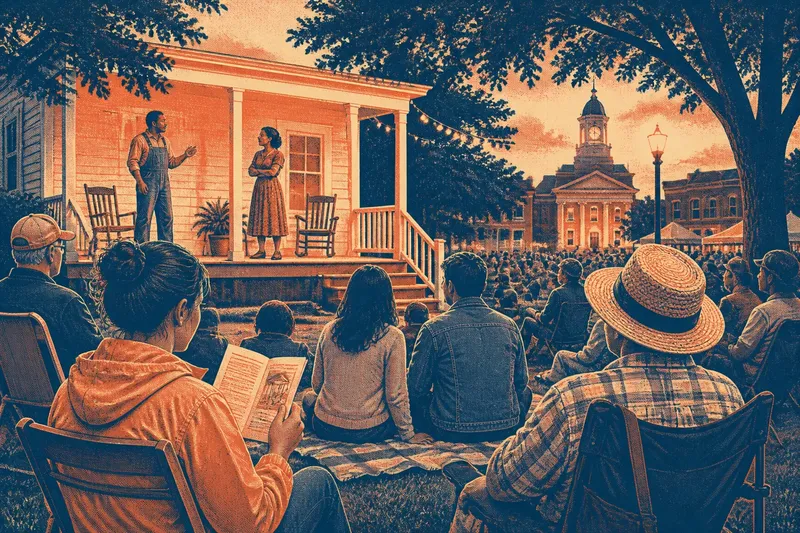
The most common mistake at a Southern outdoor play is treating the landscape as scenery and the play as something separate from it. That can make you miss how a porch, a courthouse lawn, or a familiar local phrase shapes the story. A little preparation helps you settle in and hear how the production’s place and people speak through the performance.
Outdoor theatre across the South can take place in a garden, a historic town square, a community amphitheater, or a temporary stage at a local festival. Some plays draw on regional speech, family histories, work, faith, music, or a particular town’s memory. You do not need to know the area’s whole history to follow the story; attentive listening and a few practical choices go a long way.
What makes a Southern outdoor play feel rooted in place?
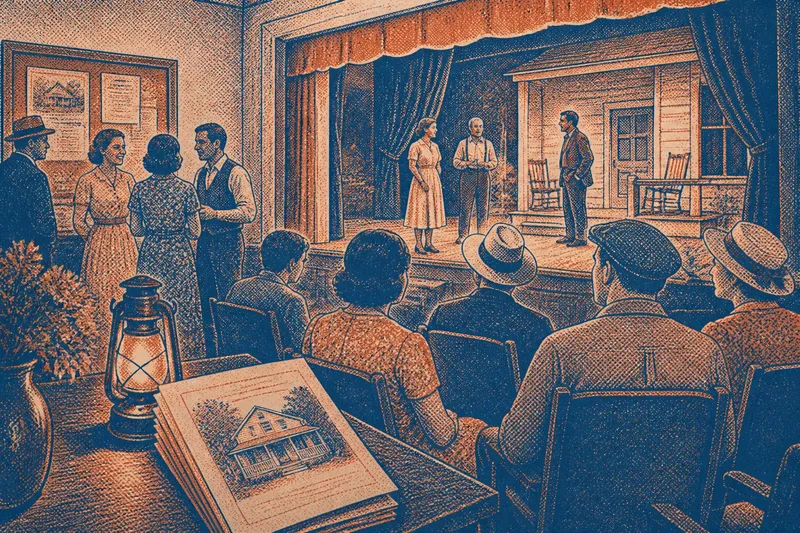
Often, it is the way a performance uses the setting rather than simply the fact that it is outside. A production might place a family argument on a farmhouse porch, let a church supper shape the rhythm of a scene, or use a town square as a meeting place where public and private stories overlap. Regional details can carry meaning through gesture, humor, music, and who knows whom.
Listen for the relationships beneath unfamiliar names or expressions. A line delivered as teasing may signal affection; a pause after a local reference may leave room for recognition. If a program includes notes about the play’s community or setting, read them before the show, but let the actors’ choices lead your understanding.
What should you check before leaving home?
Outdoor productions vary in how they arrange seating, handle weather, and accommodate audience needs. Check the venue’s own visitor information rather than assuming that a lawn, garden, or historic site works like another one you have visited.
- Observe whether the venue provides seats or expects blankets; if seats are provided, bring only what the rules allow, and if the lawn is open seating, bring a permitted blanket or chair.
- Observe the stated weather and cancellation policy; if the performance proceeds in light rain, pack an allowed rain layer, and if the venue announces a pause or cancellation, follow its directions.
- Observe which entry, restroom, and accessible routes the venue identifies; if your planned route does not meet your needs, contact staff before arrival to ask about available alternatives.
- Observe the rules for food and drink; if outside items are permitted, pack only what is allowed, and if they are not, plan to use the venue’s options or arrive fed.
- Observe whether the production offers assistive listening or other access services; if you need support, ask staff how to arrange it, and if a service is unavailable, discuss suitable options with the venue before the visit.
- Observe whether photography, recording, umbrellas, or large bags are restricted; if an item is prohibited, leave it behind, and if the policy is unclear, ask the venue rather than guessing at the entrance.
Say you are planning to see a community play on a town green. The venue says personal chairs are allowed only in a marked rear area, outside drinks are not permitted, and rain may delay the start. You check those rules, leave your folding chair at home, bring a permitted light rain shell, and plan to buy a drink on site; the result is a simpler arrival without a last-minute argument over where to sit or what to carry.
How can you settle into a regional story?
Arrive with time to find the entrance, read the program, and hear any welcome or place-specific introduction. A short note about the playwright, community, or historical setting can orient you without turning the performance into a lesson. If you are unfamiliar with a local custom or phrase, wait to see how other characters respond rather than deciding too quickly what it means.
Keep a few cues in mind as the play unfolds:
- Notice who speaks freely and who holds back; that contrast can reveal family or community expectations.
- Listen for repeated words, songs, or sayings; repetition may connect a private memory to a shared local tradition.
- Watch how actors use ordinary objects, such as a rocking chair, a hymnbook, or a work coat; those objects can tell you what matters to a character.
- Follow the reaction after a joke or story; a character’s silence or change of subject may matter as much as the line itself.
These are invitations to pay attention, not rules for decoding every reference. A regional play can leave some meanings open, and you can enjoy the characters’ relationships even when a detail is new to you.
How should you dress and pack for an outdoor performance?
Choose clothing for sitting outdoors, not only for the temperature when you leave. A light layer or rain shell can help if the evening changes, and comfortable shoes are useful on grass, gravel, or uneven paths. A cushion may suit a hard bench; a blanket may suit an open lawn if the venue permits it.
Keep your bag small and check the venue’s rules before bringing a chair, umbrella, food, or drink. Silence your phone and put it away before the performance begins. A bright screen or a noisy wrapper can pull attention from a quiet exchange, especially when the play depends on small shifts in voice and reaction.
If mobility, hearing, sensory, or health needs affect your plans, contact the venue about available arrangements. Follow its access and safety instructions, and consult a qualified professional for personal health advice where appropriate.
What if the setting or a local expression distracts you?
An outdoor performance shares its soundscape with birds, traffic, wind, and the movement of other audience members. A local expression may also be unfamiliar. You do not have to catch every word to stay with the story: notice who is speaking, what changes in the scene, and how the other characters respond.
If your attention drifts, return to a concrete action onstage, such as an actor passing an object or turning away from a relative. If you miss a line, let it go instead of reconstructing it while the next scene unfolds. When the sound is consistently difficult to follow, ask an usher discreetly whether another available listening area or an access service could help.
What do visitors often ask about Southern outdoor plays?
Do I need to understand the local dialect?
No. Listen for the meaning carried by relationships, tone, and reactions as well as individual words. A program note may explain a setting or phrase, but you can follow the dramatic action without translating every expression.
Should I bring a blanket or a chair?
Check the venue’s seating rules first. If blankets are allowed on a lawn, one may be suitable; if chairs are restricted to a particular area or not allowed, follow that policy.
What should I do if I miss a line?
Pick up the next exchange, gesture, or change in mood instead of replaying the missed words. If the program offers a short description, it may help you place the scene without giving away every detail.
Can I leave and return during the play?
Re-entry rules differ, and walking through an audience can distract others. Ask an usher about the best route and timing before the performance begins, especially if you expect to leave.
How can you leave room for the ending?
Stay attentive through the final image, pause, or bow before gathering your things. In a play rooted in a particular place, that last moment may echo an earlier gesture or sound, and it can take a beat to register.
On the way out, you might ask a companion which character or local detail stayed with them. You do not need to settle every interpretation before leaving. The useful thing is to carry one specific moment with you and notice how the play made its community feel present in the open air.
For a Southern outdoor play, the setting is not merely a backdrop: it can help shape the community’s stories and the way they are told. Arrive ready for the venue, listen for relationships as well as words, and let unfamiliar details remain questions when they need to.